
The best Axpert Inverter VM , VM ll , VM lll. These Inverter innovations done by Inverex which is leader of Market. Many companies follow their models and Inverex inverter specs.
This is quite difficult to understand which company is best after Inverex. The big question is which inverter and which inverter company is more Reliable. When we talk about cheap that mean we are also compromising on quality. Many Solar Power companies in market selling planty of inverter like Pakistan Solar Traders Homage, Voltronix and Inverex. Today we Will share basic info to compare Inverters of 2018.
Inverex VM Models Price Type Inverter
AXPERT SOLAR INVERTER VM 1.2KW PRICE IS Rs.20,500 MPPT Pure sine wave
AXPERT SOLAR INVERTER VM 2.2KW PRICE IS Rs.24,500 MPPT Pure sine wave
1st time in Pakistan MPPT solar charge controller with 1.2 KW and battery equalization. 2nd Generation smart and intelligent solar inverter. It has output power factor 1, compatible with generator and SNMP card. New smart and attractive LCD display, compatible with mains voltage.
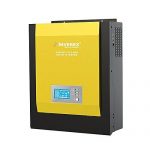
AXPERT SOLAR INVERTER VM 3.2 KW PRICE IS Rs.39,500 MPPT Pure sine wave
Inverex Axpert inverter VM solar inverter 3.2 kW MPPT solar charge controller with battery equalization. 2nd Generation smart and intelligent solar inverter. It has output power factor 1, compatible with generator and SNMP card. It has a feature of easy replacement of fans, compatible with main voltage or generator power.
AXPERT INVERTER VM III 3.2 KW PRICE IS Rs.54,500 MPPT Pure sine wave
AXPERT INVERTER VM III5.2 KW PRICE IS Rs.75,000 MPPT Pure sine wave
Main Features
- Detachable LCD control module with multiple communications
- Built-in Bluetooth for mobile monitoring (Android App is available)
- Supports USB On-the-Go function
- Reserved communication port for BMS (RS485, CAN-BUS or RS232)
- Replaceable fan design for ease of maintenance
- Supply load from Grid or PV, even battery is not available
- Configurable AC/PV output usage timer and prioritization
- Selectable high power charging current
- Selectable input voltage range for home appliances and personal computers
- Compatible to Utility Mains or generator input
- Auto restart while AC is recovering
- Cold start function
Powering Air Conditioners with Solar: A Complete Guide
Running air conditioners on solar power is one of the most challenging yet rewarding applications of renewable energy. While technically complex, it’s absolutely achievable with proper planning and investment. Here’s what you need to know about keeping cool with the sun’s energy.
The Challenge: Why ACs Are Solar’s Toughest Load
Air conditioners present three unique challenges for solar systems:
-
High Power Consumption: Even efficient units draw 1,000-2,500+ watts continuously.
-
Massive Surge Current: Compressor startups can require 3-6 times running power for 1-3 seconds.
-
Coincident Timing: Peak AC use (afternoon) aligns with peak solar production, but nighttime cooling still requires stored energy.
Understanding Your AC’s Electrical Needs
| AC Type | Typical Running Watts | Startup Surge | Daily Consumption (8h) |
|---|---|---|---|
| Window Unit (8,000 BTU) | 600-900W | 1,800-2,700W | 4.8-7.2 kWh |
| Mini-Split (12,000 BTU) | 900-1,200W | 2,700-3,600W | 7.2-9.6 kWh |
| Mini-Split (18,000 BTU) | 1,500-2,000W | 4,500-6,000W | 12-16 kWh |
| Central AC (3 Ton) | 3,500-5,000W | 10,500-15,000W | 28-40 kWh |
Key Metrics to Check on Your AC:
-
Running Amps/Watts: On the nameplate (e.g., “RLA” = Running Load Amps)
-
LRA (Locked Rotor Amps): The absolute maximum startup current (critical for inverter sizing)
-
SEER/SEER2 Rating: Higher = more efficient (aim for SEER ≥ 18 for solar applications)
Three Solar Approaches for Air Conditioning
1. Solar-Assisted Grid-Tied (Most Common & Practical)
-
How it works: Solar panels feed your main electrical panel, offsetting all home loads including AC.
-
System Components: Grid-tied inverter (string or microinverters), solar array, net meter.
-
Pros: Simple, cost-effective, uses grid as “battery” at night.
-
Cons: No cooling during grid outages.
-
Best for: Reducing electricity bills in grid-reliable areas.
2. Hybrid Solar + Battery Backup (Full Independence)
-
How it works: Solar charges batteries that power a dedicated “backup loads” panel including AC.
-
System Components: Hybrid inverter, battery bank (lithium recommended), solar array, critical loads panel.
-
Pros: Works during blackouts, maximizes self-consumption.
-
Cons: Expensive ($15k-$30k+ for sufficient capacity), complex installation.
-
Best for: Off-grid homes or areas with frequent outages.
3. Direct DC Solar Air Conditioning (Most Efficient but Niche)
-
How it works: Specialized DC-powered AC unit runs directly from solar panels through a dedicated controller.
-
System Components: DC air conditioner, MPPT controller, solar array, small battery buffer.
-
Pros: 20-30% more efficient, simpler wiring, excellent for daytime-only cooling.
-
Cons: Limited product availability, higher equipment cost, less flexible.
-
Best for: Cabins, offices, or spaces primarily occupied during daylight hours.
System Sizing Example: Running a 12,000 BTU Mini-Split
Goal: Run a 12,000 BTU, 1,100W mini-split for 6 daytime hours + 2 evening hours via battery.
Step 1: Calculate Energy Needs
-
Running wattage: 1,100W
-
Daily consumption: 1,100W × 8h = 8,800 Wh = 8.8 kWh
-
Add 20% for inverter/battery losses: 10.6 kWh needed daily
Step 2: Solar Array Sizing
-
Assume 5 peak sun hours daily
-
Solar needed: 10.6 kWh ÷ 5h = 2,120W
-
Add 25% margin: 2,650W solar array minimum
-
Recommended: 3,000-3,500W (12 x 300W panels)
Step 3: Battery Bank Sizing
-
For 2 hours of evening use: 1,100W × 2h = 2.2 kWh
-
At 48V system: 2,200Wh ÷ 48V = 46Ah
-
Depth of discharge (DoD) safety (80% for lithium): 46Ah ÷ 0.8 = 57.5Ah
-
Recommended minimum: 48V 100Ah lithium (5.1 kWh usable)
Step 4: Inverter Sizing
-
Running watts: 1,100W
-
Startup surge (3× running): 3,300W
-
Minimum inverter: 3,500W continuous, 6,500W+ surge
-
Recommended: 5,000W hybrid inverter for headroom
Critical Equipment Recommendations
Air Conditioner Choices (Best to Worst for Solar)
-
Inverter-Driven Mini-Splits (Daikin, Mitsubishi, Gree): Variable-speed compressors = low startup surge, adjustable power draw.
-
Modern High-SEER Central AC (SEER2 ≥ 18): Much more efficient than older units.
-
DC Solar AC Units (Hotspot, SolarCool): Purpose-built but limited support.
-
Standard Window Units: Avoid unless very small (≤ 8,000 BTU) and efficient (EER ≥ 12).
Essential System Components
-
Inverter: Must handle LRA surge. Look for “high surge capacity” models (Victron MultiPlus, Schneider XW+, Deye/Sol-Ark).
-
Batteries: Lithium Iron Phosphate (LiFePO4) only. Need high continuous discharge (≥ 100A). Size for at least 2-3 hours of runtime.
-
Solar Panels: More is better. Consider east-west split arrays for longer production day.
For More Details Contact us on 0304-1111-988
Also Follow our Facebook Page