N-Type TOPCon
NEPRA Net-Metering Ready
Jinko Solar Panels in Pakistan — Tiger Neo N-Type & Bifacial Models
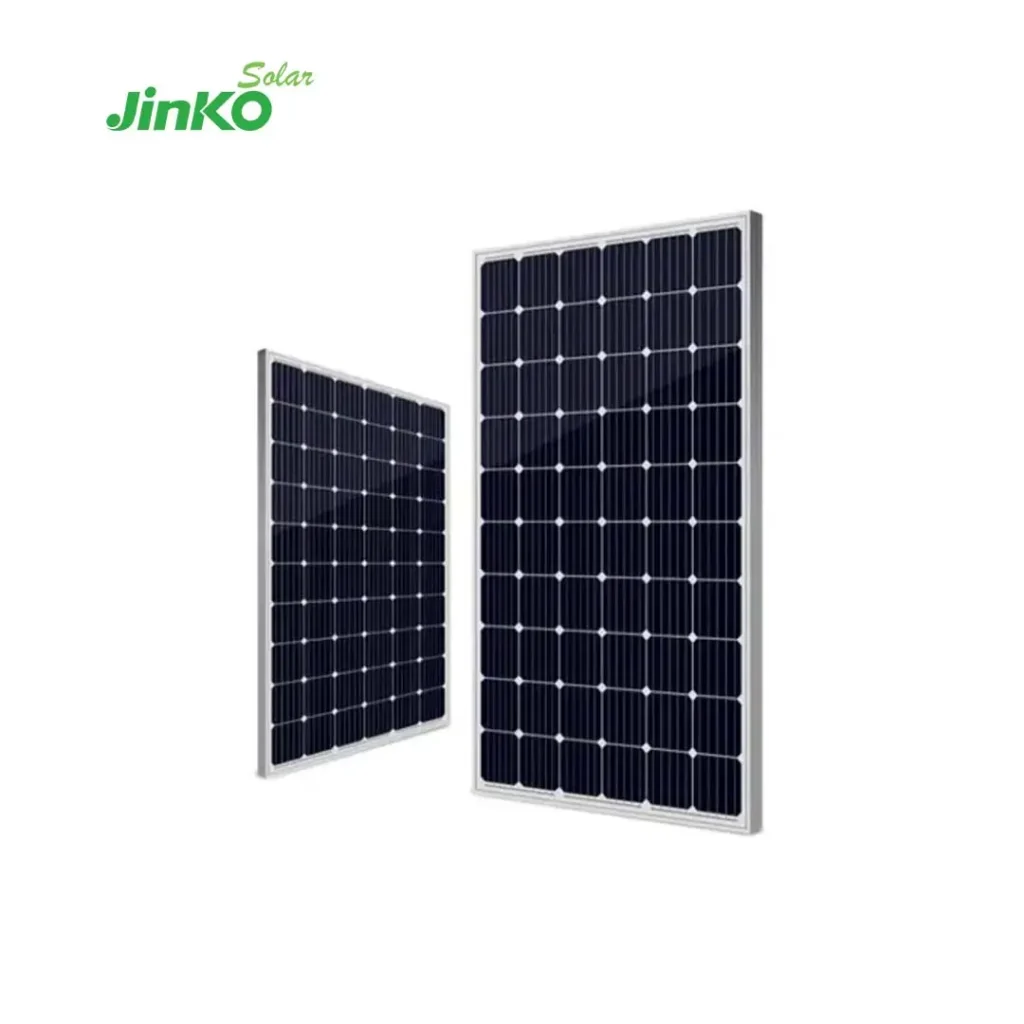
Pakistan Solar Traders stocks 20 Jinko Solar Panels models built on Jinko’s N-Type TOPCon platform, ranging from compact 460W rooftop panels to large-format 725W commercial and utility modules. Every model ships with a full datasheet and a same-day WhatsApp quote — no guesswork, no outdated online prices.
About Jinko Solar
JinkoSolar is one of the largest solar module manufacturers in the world by annual shipment volume, publicly listed on the NYSE (ticker: JKS) and headquartered in Shangrao, Jiangxi, China. Since its founding in 2006, the company has built a fully vertically integrated supply chain, controlling polysilicon and wafer production through cell fabrication and final module assembly, which gives it tighter quality control than manufacturers that outsource stages of production.
In Pakistan, Jinko Solar Panels are among the most widely specified modules by installers and EPC contractors, largely due to a consistent Tier-1 bankability rating and a decade-long shipment history into net-metering and commercial solar projects across Punjab, Sindh and KPK. If you’re comparing brands for a financed or larger project, see our full solar panel brand directory or read about how net-metering works in Pakistan before finalizing a module choice.
Key Features of Jinko Solar Panels
⚡ High Efficiency
Advanced N-Type cells convert more sunlight into usable electricity from the same roof area.
🔬 N-Type TOPCon Technology
Lower degradation and a stronger temperature coefficient than older P-Type panels.
🔆 Bifacial Energy Gain
Selected models harvest additional output from reflected light on the rear glass surface.
☁️ Strong Low-Light Output
Dependable generation during cloudy spells and early morning or late afternoon sun.
🛡️ Durable Build Quality
Certified to withstand wind load, snow load, humidity and Pakistan’s dusty outdoor conditions.
✅ Long-Term Warranty
Most models pair a multi-year product warranty with a 25–30 year linear power warranty.
Jinko’s Solar Panel Technology Explained
Jinko’s Tiger Neo series is built on N-Type TOPCon (Tunnel Oxide Passivated Contact) cell technology, which has replaced the older P-Type PERC cells that were standard in panels manufactured before roughly 2022. A thin tunnel oxide layer beneath the rear contact reduces electron recombination losses at the cell surface, so more of the sunlight striking the cell is converted into usable electricity instead of being lost as heat. In practical terms for a Pakistani rooftop, that means higher efficiency, slower first-year degradation, and steadier output through the hottest months of the year.
Jinko also uses SMBB (multi-busbar) interconnection across the Tiger Neo range, spreading current collection across more, thinner wires per cell instead of a handful of thick busbars. This lowers resistive losses and improves tolerance to the small micro-cracks that can occur during shipping and rooftop installation. Compact panels in this catalog (roughly 460–670W) use a 182mm wafer on a half-cut cell layout, while the large-format bin (705W and above) steps up to a 210mm wafer platform designed for utility and large commercial ground-mount projects. For a deeper look at other high-efficiency platforms, see our guide on LONGi’s Hi-MO X10 panels or browse the complete panel brand comparison.
Not sure which wattage fits your roof? Send your roof size or monthly unit consumption and we’ll recommend a specific Jinko model.
All 20 Jinko Solar Panel Models in Pakistan
Tap any model to WhatsApp us for today’s confirmed price and stock.
From compact 460W rooftop panels to large-format 725W commercial and utility modules — every Jinko Solar Panel below includes its series, configuration, and current stock status.
🖼️ = replace with your product photo. In WordPress, click each image placeholder’s spot and use Add Media to insert a real photo, then delete this note.
Other Solar Panel Brands We Stock
Comparing options before committing to Jinko? Browse solar panels from other manufacturers carried by Pakistan Solar Traders.
Jinko Panel Series Available in Pakistan
Pakistan Solar Traders currently stocks 20 Jinko models across four series:
Cheetah & Eagle
Compact mono PERC panels, 460–535W, for small budgets and limited roof space.
Swan Bifacial
Ground-mount optimized bifacial panel for elevated, reflective installations.
Tiger Neo
Core N-Type TOPCon platform, 585–670W, the most common choice for rooftop net-metering.
Tiger Neo Large-Format
210mm-wafer platform, 705–725W, built for utility and industrial-scale projects.
Jinko Model Quick-Reference Table
| Model | Power (STC) | Configuration | Best Suited For | Datasheet |
|---|---|---|---|---|
| Cheetah HC 460W | 460W | Monofacial | Small shops, compact rooftops | View → |
| Eagle 535W | 535W | Monofacial | 3–5kW residential net-metering | View → |
| Swan Bifacial 550W | 550W | Bifacial | Ground-mount, carports | View → |
| BDX 585W | 585W | N-Type Bifacial | Standard residential rooftops | View → |
| 630W N-Type Bifacial | 630W | N-Type Bifacial | 5–10kW residential systems | View → |
| Tiger Neo 3.0 645W | 645W | N-Type Bifacial | Commercial rooftops | View → |
| 705W (24BB) | 705W | Large-Format Bifacial | Commercial ground-mount | View → |
| 725W | 725W | Large-Format Bifacial | Utility-scale solar farms | View → |
Choosing the Right Jinko Wattage for Your Project
For small rooftops and tight budgets, Jinko’s 460–535W Cheetah and Eagle panels keep panel count low without oversizing the system. For most residential and small commercial net-metering systems, the 585–670W Tiger Neo range is the practical sweet spot — a manageable size and weight for standard rafter-mounted racking, matching the string voltage ranges most residential hybrid inverters in Pakistan are designed around. Pair any of these with a suitably sized grid-tie or hybrid inverter and confirm your project qualifies under current net-metering rules before finalizing an order.
For utility-scale ground-mount and large commercial carport projects, Jinko’s 705–725W large-format panels reduce the total module count per megawatt, cutting racking, cabling and installation labor costs — though these larger panels are physically bigger and heavier, so confirm your mounting structure and installation team are equipped for them.
Sizing a Jinko System for Your Home or Business
Using a mid-range Jinko panel rated around 630W, a typical small residential net-metering system breaks down roughly as follows: a 3kW system needs about 5 panels, a 5kW system needs about 8 panels, and a 10kW commercial or larger residential system needs roughly 16 panels — before accounting for inverter sizing, shading losses, and available roof area. See our dedicated 5kW solar system and 10kW solar system pages for complete package breakdowns, or WhatsApp us for a free custom sizing estimate.
Bifacial vs Monofacial Jinko Panels
Bifacial panels generate additional power from their rear side when mounted on elevated racking over a reflective or light-colored surface — white gravel, concrete, or a reflective roofing membrane — useful for ground-mount and carport installations where rear-side gain can meaningfully add to total energy yield. Monofacial panels, which generate only from the front, are simpler, slightly lighter, and typically a little less expensive: a sensible choice for standard rooftop installations with no reflective surface underneath.
Solar Panel Terms Explained
STC (Standard Test Conditions)
The lab conditions — 1000 W/m² irradiance, 25°C cell temperature — manufacturers use to rate a panel’s power output. Real-world output in Pakistan is often lower once rooftop heat, dust and sun angle are factored in.
N-Type vs P-Type
Refers to how the silicon wafer is doped. Older P-Type (PERC) cells are cheaper but degrade faster and perform worse in heat. N-Type cells degrade more slowly and handle summer roof temperatures better.
Temperature Coefficient
How much power a panel loses for every 1°C rise above 25°C. A less negative coefficient means less output lost on a hot rooftop.
Linear Power Warranty
A guarantee of minimum output at specific years of the panel’s life, commonly “≥87% of rated output at year 30.”
Installation & Mounting Considerations
Jinko’s compact 144-cell panels fit standard residential rafter spacing and most locally available mounting rail systems without modification. The large-format 210mm panels are physically bigger and noticeably heavier: confirm your roof structure, purlin spacing and racking system are rated for the additional weight and wind loading before specifying these on a rooftop rather than a ground-mount installation. Always confirm your inverter’s DC input voltage range and maximum string length against the panel’s Voc (open-circuit voltage) before finalizing string design, and ensure adequate rear ventilation behind the panels to reduce operating temperature and improve output.
Warranty & After-Sales Support
Jinko backs the Tiger Neo range with a standard 12-year product warranty and a 30-year linear power output warranty, guaranteeing a defined minimum output percentage at year 30 — typically around 87%. In Pakistan, warranty claims are generally handled through the importing distributor rather than directly with JinkoSolar’s head office, so keep the original invoice and confirm in writing exactly which local entity is honoring the warranty terms before purchase.
Buying Checklist for Jinko Solar Panels
1. Confirm the model code
Match the code on the manufacturer datasheet to what’s printed on the panel’s rear label.
2. Request the real datasheet
Ask for the manufacturer’s PDF datasheet, not a reseller’s abbreviated spec sheet.
3. Check net-metering compatibility
Confirm your inverter and panel combination is on your DISCO’s approved equipment list.
4. Get warranty support in writing
Ask specifically who honors the warranty locally, and get it on your invoice.
5. Confirm today’s price
Panel prices move daily — WhatsApp for a same-day quote rather than an old number.
Related Resources
Net Metering in Pakistan
How NEPRA net-metering works, DISCO approval, and what to check before going grid-tied.
Solar Inverter Prices in Pakistan
Compare hybrid and on-grid inverter brands to pair with your Jinko panels.
Lithium Batteries Pakistan
Add battery storage to a Jinko-based hybrid system for backup during outages.
5kW Solar Systems
A complete package breakdown for a standard residential 5kW net-metering setup.
10kW Solar System
Sizing and component guidance for larger residential or small commercial loads.
Hybrid Solar Systems Pakistan
Understand hybrid vs on-grid setups before choosing your Jinko panel configuration.
Ready to Go Solar with Jinko?
Tell us your roof size, budget or monthly units and we’ll recommend the right Jinko Solar Panels model — free of cost, no obligation.
Frequently Asked Questions About Jinko Solar Panels
Is Jinko a Tier-1 solar panel brand?
Tier-1 is an informal industry classification, not an official certification, used to describe manufacturers with strong bankability, consistent shipment volumes, and a proven track record. Jinko is commonly regarded within this classification, though standing can shift year to year — ask for the manufacturer’s current Tier 1 listing status if this matters for a financed project.
What is the price of Jinko solar panels in Pakistan?
Prices move daily with USD/PKR exchange rates and international module costs, so fixed prices are not published on this page. WhatsApp 0300-0644424 or call UAN 0304-1111988 for today’s confirmed rate on any model.
Which Jinko panel wattage should I choose?
It depends on the project: 460–535W panels suit compact rooftops and small budgets, 585–670W panels suit standard residential and commercial net-metering systems, and 705–725W panels suit large commercial and utility-scale ground-mount projects. Share a roof size or project scale for a specific recommendation.
How long is the warranty on Jinko solar panels?
Most Tiger Neo models carry a 12-year product warranty and a 30-year linear power warranty guaranteeing roughly 87% of rated output at year 30, though exact terms vary by SKU.
What is the difference between Jinko’s compact and large-format panels?
Compact panels, roughly 460–670W, use a 182mm wafer and fit standard residential rooftops. Large-format panels, 700W and above, use a bigger 210mm wafer, are physically larger and heavier, and generally suit commercial rooftops or ground-mount arrays with reinforced racking.
Does Jinko make monofacial and bifacial versions of the same panel?
Yes. Several models in this catalog are available in both monofacial and bifacial configurations at similar wattages — the bifacial version adds a rear glass layer for rear-side generation, at a small weight and cost premium.
Can I mix Jinko panels with a different brand’s inverter?
Yes. Jinko panels use standard MC4-compatible connectors and work with virtually any grid-tie or hybrid inverter available in Pakistan, as long as the inverter’s input voltage and current ranges match the string design.
Is Jinko compatible with Pakistan’s net-metering policy?
Yes, Jinko panels use standard electrical characteristics compatible with any NEPRA-approved grid-tie or hybrid inverter used in net-metering installations. Confirm the specific inverter and panel combination is on the local DISCO’s approved list before installation.
How long does delivery take after ordering Jinko panels?
Delivery timelines depend on current stock and destination city. WhatsApp 0300-0644424 or call UAN 0304-1111988 for a confirmed delivery estimate before placing an order.
What happens if a Jinko panel arrives damaged?
Inspect all panels on delivery and document any visible glass cracks, frame damage, or junction box issues with photos immediately, and report damage before installation, since most warranty terms exclude transport damage reported afterward.
Browse the full Jinko lineup above — from compact 460W residential panels to large-format 725W commercial modules — and WhatsApp 0300-0644424 or call UAN 0304-1111988 for today’s confirmed price and current stock on any model.