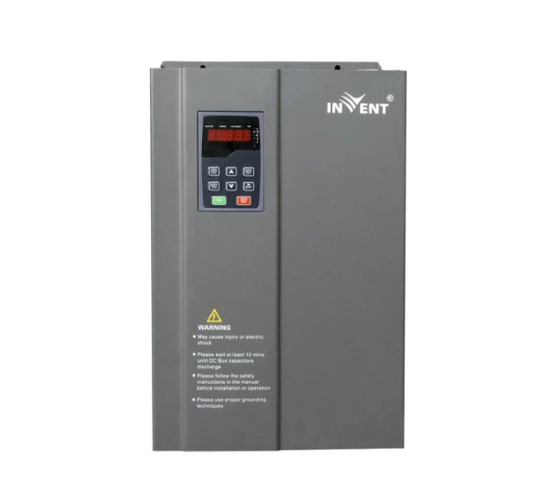
Invent VFD Inverter: A Comprehensive Technical Overview
The Invent VFD (Variable Frequency Drive) Inverter represents a sophisticated class of power conversion equipment designed for precise control of AC motor speed and torque. Unlike standard solar or hybrid inverters that convert DC to AC, a VFD inverter functions by converting incoming AC power (from the grid or a generator) into a variable-frequency, variable-voltage AC output. This fundamental principle allows for unparalleled command over industrial motor-driven systems, leading to significant gains in efficiency, process control, and operational longevity.
Core Operating Principle and Technology
At its heart, the Invent VFD operates on a three-stage process: Rectification, DC Bus Filtering, and Inversion. First, the incoming fixed-frequency AC power (e.g., 50/60 Hz) is converted to DC power using a diode or controlled transistor bridge rectifier. This DC power is then smoothed and filtered by capacitors and inductors in the DC bus section, creating a stable DC voltage. Finally, the crucial inversion stage occurs, where Insulated Gate Bipolar Transistors (IGBTs) switch the DC power on and off at an extremely high frequency, synthesizing a pulsating waveform that mimics AC power. By precisely modulating the pulse width (a technique known as Pulse Width Modulation or PWM), the VFD controls both the voltage and the frequency of the output power supplied to the motor. This allows the motor’s speed to be varied seamlessly from zero to beyond its base rated speed, directly proportional to the output frequency.
Key Technical Specifications and Features
A typical Invent VFD series encompasses a wide power range, from sub-1kW units for small pumps to several hundred kilowatts for heavy industrial machinery. Key specifications include a wide input voltage tolerance (e.g., 380V to 480V for three-phase models), a broad output frequency range (typically 0 to 400 Hz or higher), and high carrier frequencies for smoother motor operation. Distinctive features include:
-
Multiple Control Modes: Support for V/F (Voltage/Frequency) control for simple applications, Sensorless Vector Control (SVC) for improved low-speed torque, and Closed-Loop Vector Control for applications requiring high precision and dynamic response.
-
Advanced Programmability: Equipped with a digital keypad and software for setting hundreds of parameters, including acceleration/deceleration ramps, torque limits, and multi-speed setpoints.
-
Integrated Protection Systems: Comprehensive safeguards are standard, including overload protection, short-circuit protection, over-voltage and under-voltage protection, ground fault monitoring, and motor overheating prevention.
-
Communication Capabilities: Built-in support for industrial communication protocols like Modbus RTU, Profibus, and Ethernet/IP, enabling seamless integration into Plant Automation Systems and SCADA networks.
Primary Applications and Use Cases
The application spectrum for Invent VFDs is vast. They are indispensable in HVAC systems for controlling compressor and fan speeds in chillers and air handling units, leading to substantial energy savings. In industrial automation, they precisely control conveyor belt speeds, synchronize multiple drives, and manage the tension in winding machines. For water and wastewater management, VFDs are critical for controlling pump speeds in variable pressure boosting systems, eliminating the need for inefficient throttle valves and reducing water hammer. They are equally vital in material handling, machine tools, and textile manufacturing, where precise motor control is synonymous with product quality and operational safety.
Tangible Benefits and Advantages
The implementation of an Invent VFD inverter yields profound benefits. The most significant is energy efficiency; reducing a motor’s speed by just 20% can result in energy savings of up to 50%, according to the affinity laws for pumps and fans. This directly translates to lower operational costs and a reduced carbon footprint. Furthermore, VFDs enhance process control by allowing fine-tuned adjustments to speed and torque, improving product consistency. They also reduce mechanical stress on motors and driven equipment by providing soft starts and stops, which minimizes wear on belts, gears, and bearings, thereby extending asset life and reducing maintenance downtime.
In conclusion, the Invent VFD Inverter is not merely a motor controller but a strategic investment in operational excellence. By transforming fixed-speed systems into intelligent, variable-speed applications, it delivers a powerful combination of energy conservation, enhanced process control, and improved system reliability, making it a cornerstone of modern industrial and commercial electromechanical systems.