
Solar Charge Controller
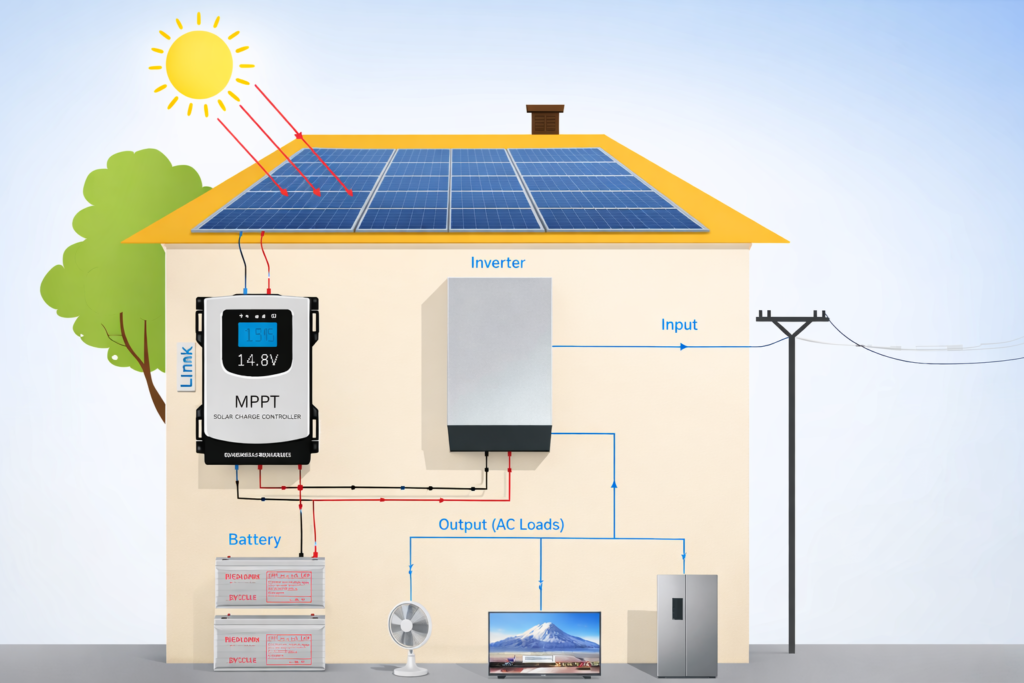
 A solar charge controller is one of the most important components in an off-grid or hybrid solar power system. It manages and regulates the power flow between solar panels, batteries, and connected loads so that the battery bank charges safely and efficiently. Without a proper charge controller, a solar system with battery storage can face overcharging, overheating, excessive discharge, reduced battery life, and unstable performance.
In simple words, a solar charge controller works as the safety manager of your solar battery system. Solar panels can produce variable voltage and current depending on sunlight conditions, temperature, and panel configuration. Batteries, however, need controlled charging based on their chemistry and voltage level. The controller ensures that the battery receives the right amount of energy at the right time. This not only protects the battery from damage but also improves overall system reliability, efficiency, and long-term value.
Solar charge controllers are widely used in off-grid solar systems, hybrid solar systems, battery backup setups, solar street lights, solar water pumps, and remote energy applications. If your solar system includes a battery bank, then a charge controller is not optional. It is a necessary component for protecting your investment and ensuring safe operation.
Why a Solar Charge Controller is Important
The main job of a solar charge controller is to prevent batteries from overcharging. When batteries are overcharged, they can heat up, lose capacity, swell, and in some cases become unsafe. In lead-acid batteries, overcharging can cause electrolyte loss and shorten battery lifespan. In lithium battery systems, improper charging can affect performance, cell balance, and safety. A quality charge controller solves this problem by monitoring incoming solar power and adjusting charging behavior according to battery condition.
It also helps prevent deep discharge in systems where load control is available. This is important because excessive battery discharge can also reduce battery life and system performance. Some advanced controllers can disconnect loads automatically when battery voltage drops too low. This feature is especially helpful in remote systems, solar lighting, and backup applications where battery protection is essential.
Another important benefit is reverse current protection. At night, when solar panels are no longer producing power, electricity can flow backward from the battery into the panels if the system is not properly regulated. A solar charge controller prevents this reverse current flow and protects stored battery energy.
Types of Solar Charge Controllers
1. PWM Solar Charge Controller
PWM stands for Pulse Width Modulation. This type of controller is commonly used in smaller and budget-friendly solar systems. A PWM controller gradually reduces the amount of power sent to the battery as it approaches full charge. It is a reliable and cost-effective option for simple systems where panel voltage and battery voltage are closely matched.
PWM controllers are often used in small homes, cabins, solar lighting systems, and low-capacity battery charging setups. They are straightforward, economical, and practical where system size is limited and maximum efficiency is not the top priority.
2. MPPT Solar Charge Controller
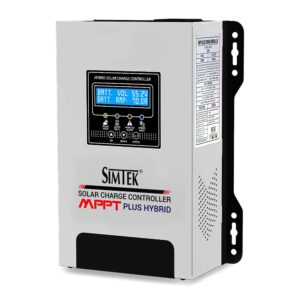
MPPT stands for Maximum Power Point Tracking. This is a more advanced and efficient technology. An MPPT controller continuously tracks the best operating point of the solar panel array so it can extract more usable power and convert it into effective battery charging current. It is especially useful when solar panel voltage is higher than battery bank voltage.
MPPT controllers are the preferred choice for larger systems, modern residential setups, commercial battery systems, and applications where maximum energy harvest matters. They can deliver significantly better performance than PWM in many situations, especially in cooler weather, variable sunlight, or systems with higher-voltage solar arrays.
Key Features and Benefits
- Battery Protection: Protects against overcharging, overheating, and excessive discharge.
- Efficient Charging: Helps the battery charge correctly for better performance and longer life.
- Load Control: Some models can manage DC loads and disconnect them at low voltage.
- LCD or App Monitoring: Displays voltage, current, charging status, and system information.
- Wide Battery Compatibility: Supports lead-acid, AGM, gel, and LiFePO4 batteries in many models.
- Auto Voltage Detection: Available in 12V, 24V, and 48V systems depending on controller type.
- Reverse Current Protection: Stops energy from flowing back into solar panels at night.
- Safety Functions: Can include short-circuit, reverse polarity, overload, and over-temperature protection.
Applications of Solar Charge Controllers
Solar charge controllers are used in a wide range of solar energy applications. In off-grid homes, they help charge the battery bank safely so stored solar energy can be used at night or during cloudy weather. In hybrid systems, they help manage battery charging where backup storage is part of the design. In solar street lights and remote power units, they are vital for protecting batteries and ensuring dependable daily operation.
- Off-grid solar systems
- Hybrid solar systems
- Solar street lights
- Solar water pumps
- Battery backup systems
- RVs, cabins, farms, and remote monitoring stations
How to Choose the Right Solar Charge Controller
Choosing the right controller depends on your system voltage, battery type, total solar panel capacity, and long-term energy goals. First, make sure the controller matches your battery bank voltage such as 12V, 24V, or 48V. Second, check the current rating. The controller must be able to handle the total current produced by the solar array. Third, consider the type of battery you are using. Different batteries require different charging profiles, so compatibility matters.
If you are building a small system on a limited budget, a PWM controller may be sufficient. But if you want better efficiency, higher performance, and flexibility with larger panel strings, then an MPPT controller is usually the better investment. It is also wise to choose a controller with monitoring features so you can view charging performance and spot problems early.
PWM vs MPPT: Which One is Better?
The answer depends on system size and performance expectations. PWM controllers are suitable for smaller, simpler, and lower-cost systems. They work well where solar panel voltage is close to the battery voltage and where energy demand is modest. MPPT controllers are better for larger systems, professional installations, and situations where every bit of solar production matters. They offer better energy harvesting, more flexibility, and stronger overall performance, especially in demanding conditions.
For users planning long-term battery backup, higher wattage solar panels, or future expansion, MPPT usually provides greater value. For basic solar lighting or small charging setups, PWM can still be a practical option.
Why Buy from Pakistan Solar Traders?
At Pakistan Solar Traders, we help customers choose the right solar components based on real system requirements rather than guesswork. Whether you need a solar charge controller for a home backup system, an off-grid installation, or a battery-supported solar project, proper sizing and compatibility are essential. We guide customers in selecting suitable products for their solar panels, battery bank, and inverter configuration.
You can also explore related categories including solar inverters in Pakistan, lithium batteries, on-grid solar systems, and solar panels price in Pakistan to build a complete solar energy solution.
Strong Internal Linking
- Solar Charge Controller
- Solar Inverters in Pakistan
- Hybrid Solar Inverter
- Off-Grid Solar System
- On-Grid Solar System
- Lithium Battery
- Solar Panels Price in Pakistan
- Contact Us
Frequently Asked Questions
What does a solar charge controller do?
A solar charge controller regulates the power coming from solar panels to batteries. It protects the battery from overcharging, deep discharge, and unsafe charging conditions.
What is the difference between PWM and MPPT?
PWM is a simpler and more budget-friendly charging method for small systems, while MPPT is a more advanced and efficient technology that can harvest more usable energy from solar panels.
Can I use a solar charge controller with lithium batteries?
Yes, many modern controllers support lithium batteries, including LiFePO4, but the controller must have the correct charging settings and compatibility.
Is a charge controller necessary in every solar system?
A charge controller is necessary in solar systems that include battery storage. If there is no battery bank, the system design may use other equipment depending on the application.
Which solar charge controller is better for larger systems?
MPPT solar charge controllers are generally better for larger systems because they offer higher efficiency, better power tracking, and improved energy harvest.
Contact Pakistan Solar Traders
UAN: 0304-1111-988
WhatsApp: 03324129441
Email: info@pkistansolartraders.com
Facebook: Follow our Facebook Page