
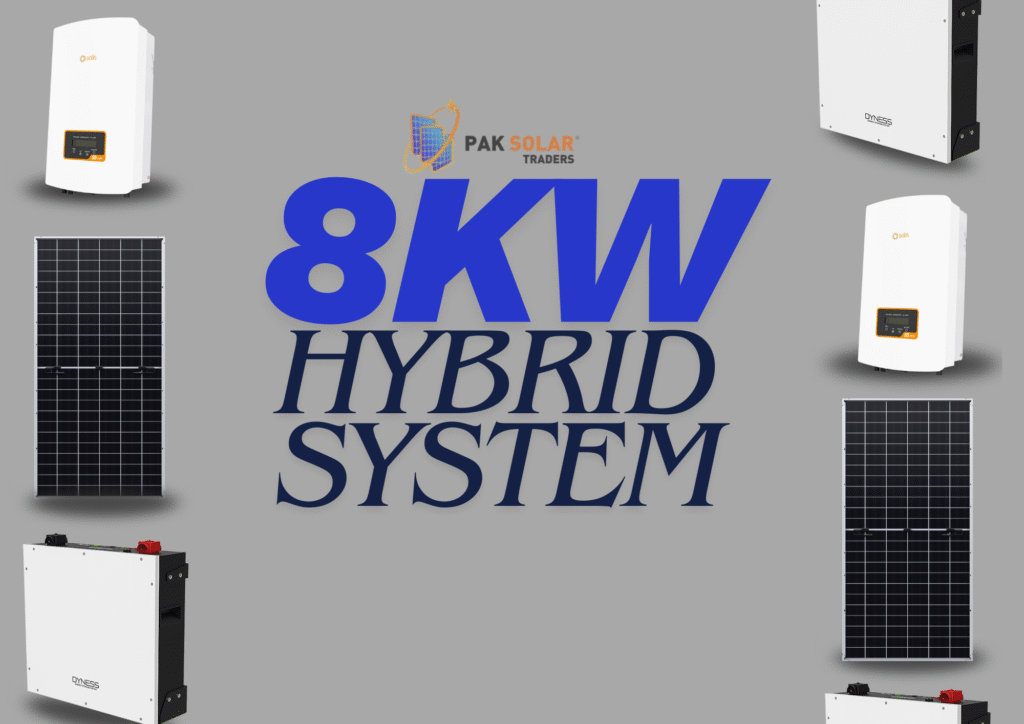
8kW Solar System in Pakistan – Hoymiles, Crown Micro & Exide Lithium Battery Options
A 8kW solar system in Pakistan is an ideal choice for large homes, luxury residences,
offices, clinics, shops, and commercial spaces that need strong daytime generation with reliable
backup options. At Pak Solar Traders,
we design premium 8kW solar systems with advanced inverter and lithium battery
combinations for smart energy savings, better appliance protection, and long-term solar performance.
Quick Contact
- WhatsApp: 0332-4129441
- UAN: 0304-1111988
- Email: info@pakistansolartraders.com
- Website: www.pakistansolartraders.com
Why Choose an 8kW Solar System?
An 8kW solar setup is one of the most practical solutions for consumers who want
serious bill reduction with high-performance equipment. This system size is commonly selected by users
running multiple air conditioners, refrigerators, washing machines, water pumps, office loads, and
other heavy appliances. With quality hybrid inverter technology and a suitable lithium battery bank,
an 8kW setup can give better backup management, improved solar utilization, and smoother daily power support.
If you are still comparing options, you can also explore our
8kW Solis Solar System,
solar system prices in Pakistan,
solar inverter in Pakistan,
and on-grid inverter guide
to compare different technologies before finalizing your installation.
Key Benefits of 8kW Solar System in Pakistan
Strong Daily Production
Suitable for high electricity consumption users who need powerful daytime generation for homes, offices, and retail spaces.
Excellent Bill Reduction
Helps reduce dependency on expensive grid electricity and supports long-term savings on monthly energy costs.
Battery Backup Ready
Hybrid inverter and lithium battery combinations make this size ideal for users who want backup during load shedding.
Premium Upgrade Path
Offers room for future expansion, smart monitoring, and more reliable appliance protection than basic entry-level systems.
Premium 8kW Solar System Packages
Below are three premium package concepts requested for Pak Solar Traders. These card-style packages
are excellent for customers who want branded inverter and lithium battery combinations with modern performance.
8kW Hoymiles Inverter + Haier / Westwood 10kW Lithium Battery
This package is ideal for users who want a premium 8kW solar system with
advanced monitoring, reliable conversion performance, and a larger lithium backup bank for better
night-time support. It is a strong solution for luxury homes, offices, and energy-conscious users
looking for efficient solar + storage integration.
- Suitable for high-load homes and commercial spaces
- Premium lithium backup for longer backup hours
- Better energy management for fans, lights, fridge, WiFi, and selected AC loads
- Smart monitoring and modern solar control approach
8.6kW Crown Micro Inverter + Crown Micro Lithium Battery
The Crown Micro NOVA 8.6kW hybrid inverter package is an attractive choice for
users who want modern hybrid features, neat design, monitoring support, and strong battery compatibility.
It is well-suited for homes that need powerful solar production with dependable lithium backup support.
- Best for residential and small commercial backup use
- Hybrid-ready design for daily solar optimization
- Clean card-style product presentation for premium buyers
- Ideal for customers comparing hybrid inverter brands in Pakistan
8kW Exide Dragon ASP 8kW + Exide Atlantic 51.2V 105Ah Lithium Battery
This package is designed for buyers who prefer a recognized name with clean installation, reliable
off-grid style backup support, and trusted lithium storage. The Exide Dragon ASP 8kW
inverter paired with the Exide Atlantic lithium battery is a smart package for
homes and offices needing robust backup performance.
- Strong option for backup-focused users
- Good fit for homes with load shedding concerns
- Premium battery wall style installation appearance
- Suitable for customers who prefer branded system components
What Is Included in a Professional 8kW Solar Installation?
High-Efficiency Solar Panels
A standard 8kW solar system for home usually uses high-wattage mono PERC or N-type solar panels.
Panel selection affects total generation, rooftop space utilization, and long-term output stability.
Hybrid / Microinverter Solution
The inverter is the heart of the system. It converts solar DC power into usable AC electricity and also
manages battery charging, load prioritization, and backup behavior in advanced systems.
Lithium Battery Storage
Lithium batteries are preferred for fast charging, long cycle life, better efficiency, lower maintenance,
and compact installation compared with conventional lead-acid batteries.
Structure, Protection & Wiring
A professional package also includes mounting structure, DC/AC protection, breakers, cabling, earthing,
and quality installation practices for safe and long-term operation.
Why Buy from Pak Solar Traders?
Pak Solar Traders helps customers choose the right solar size, the right battery backup,
and the right inverter brand based on actual load demand. Whether you are upgrading from a smaller system
or planning a new installation, our team can guide you toward a better-fit package for your roof size,
appliance usage, and budget expectations.
We also recommend checking related categories such as
solar panels in Lahore,
hybrid solar inverter in Pakistan,
and Pakistan Solar Traders homepage
for more product options, updated solar trends, and complete system guidance.
Similar Products You May Also Like
8kW Solis Solar System
Ideal for customers who want a clean branded hybrid or on-grid solar setup with efficient output and strong market trust.
Solar Inverter in Pakistan
Compare hybrid, on-grid, and off-grid inverter options for homes, offices, shops, and commercial solar users.
Solar System Prices in Pakistan
Explore market-wise system pricing, package comparison, and brand-based solar cost guidance for buyers.
Get a Custom 8kW Solar Quote Today
For latest pricing, installation details, battery backup options, and customized recommendations,
contact Pak Solar Traders today.