
The Ultimate Guide to Installing a 10kW Solar System in Pakistan (2026)
Harnessing the Power of the Sun: Your Path to Energy Independence
Pakistan, blessed with over 300 sunny days annually and solar irradiance levels among the highest in the world, presents an ideal landscape for solar energy adoption. As electricity costs continue to rise and power shortages persist, a 10kW solar system emerges as a transformative solution for homeowners and businesses seeking energy autonomy, substantial savings, and a greener footprint.
What Exactly is a 10kw Solar System in Pakistan?
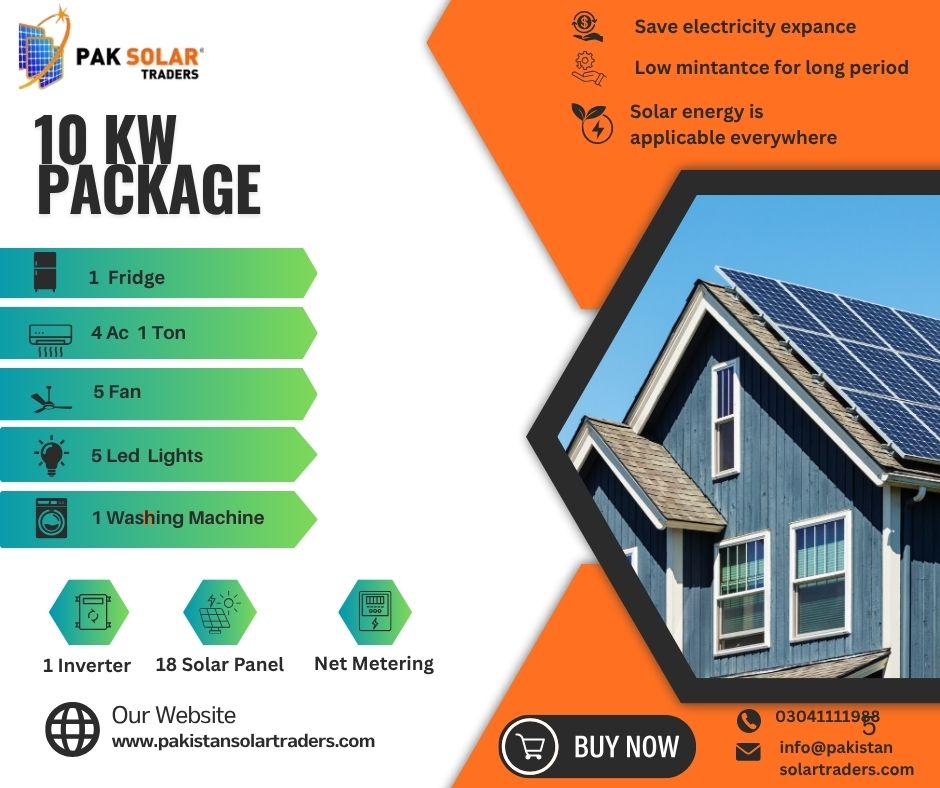
A 10kW solar system is a mid-to-large scale photovoltaic installation capable of generating approximately 10,000 watts of DC power under optimal conditions. In practical terms, this system typically comprises:
-
28-32 high-efficiency solar panels (depending on wattage ratings, commonly 330W to 370W panels)
-
A hybrid or on-grid inverter (usually 10kW capacity)
-
Mounting structures and tracking systems (fixed or automated)
-
DC-AC cabling, connectors, and protection devices
-
Optional battery storage for backup power
Energy Production: What Can You Expect in 10kw Solar System in Pakistan?
In Pakistan’s favorable climatic conditions, a 10kW system demonstrates impressive performance:
-
Daily Generation: 40-55 kWh (depending on season and location)
-
Monthly Output: 1,200-1,650 kWh
-
Annual Production: 14,000-18,000 kWh
These figures translate to powering substantial electrical loads. A typical upper-middle-class Pakistani household consuming 1,500-2,000 units monthly can expect the system to cover 70-100% of their energy needs, while commercial establishments can offset significant operational costs.
Comprehensive Component Breakdown of 10kw Solar System in Pakistan
1. Solar Panels: The Heart of Your System
Modern systems utilize monocrystalline PERC panels with efficiencies exceeding 20%. Tier-1 manufacturers like Jinko, Longi, Canadian Solar, and JA Solar offer robust warranties (25+ years on performance, 10-12 years on materials) ensuring long-term reliability in Pakistan’s diverse weather conditions.
2. Inverters: The Brain Converting Sunlight to Usable Power
For Pakistan’s grid environment with frequent fluctuations, hybrid inverters from brands like Growatt, Huawei, Sungrow, and Goodwe provide optimal performance. These units intelligently manage solar production, battery charging/discharging, and grid interaction while protecting connected appliances.
3. Mounting Structures: Engineering for Durability
Given Pakistan’s varied terrain—from the plains of Punjab to the mountainous north—engineered mounting solutions must account for wind loads (up to 150 km/h in some regions), roof integrity, and optimal tilt angles (typically 28-30° for most of Pakistan).
4. Optional Battery Storage: Overcoming Load-shedding
While increasing initial investment by 30-40%, lithium-ion batteries (5-10 kWh capacity) provide 4-8 hours of backup during outages. Popular options include Pylontech, Dyness, and Tesla Powerwall alternatives now available in Pakistan.
These costs include design, installation, commissioning, and net-metering application assistance.
Net Metering: The Game-Changer
Pakistan’s net-metering policy allows excess solar energy to be exported to the grid, earning credits that offset night-time consumption. A properly sized 10kW system often produces surplus energy during sunny months, creating a “virtual battery” through the grid.
Ideal Applications of 10kw Solar System in Pakistan: Who Benefits Most?
Residential Sector
-
Large homes (3,500+ sq. ft.) with 3-5 air conditioners
-
Households with monthly electricity bills exceeding PKR 25,000
-
Properties in areas with unreliable grid supply
Commercial & Agricultural 10kw Solar System in Pakistan
-
Small to medium enterprises (retail shops, offices, clinics)
-
Educational institutions
-
Dairy farms and agricultural processing units
-
Water pumping operations for irrigation
Industrial 10kw Solar System in Pakistan
-
Small manufacturing units
-
Workshops and fabrication facilities
-
Cold storage and refrigeration facilities
Installation Process: From Consultation to Commissioning
-
Site Assessment & Energy Audit (3-5 days): Technical evaluation of roof/ground space, shading analysis, and consumption pattern review
-
System Design & Proposal (5-7 days): Customized engineering design, component selection, and financial modeling
-
Documentation & Approvals (15-30 days): Net-metering application submission to DISCO (Distribution Company)
-
Installation & Commissioning (10-15 days): Physical installation, electrical connections, and system testing
-
Net-Metering Integration (10-20 days): DISCO inspection, meter replacement, and grid synchronization
Regulatory Framework & Incentives
Government Support Initiatives
-
Net Metering Regulations: Standardized across all DISCOs since 2015
-
Customs Duty Exemptions: On solar panel imports (as of 2024)
-
Sales Tax Concessions: Reduced rates on solar equipment
-
Provincial Initiatives: Punjab’s “Solarize Punjab” and Sindh’s solar programs offer additional financing options
Net Metering Process Simplified
-
Submit application with technical documents to local DISCO
-
Receive feasibility approval (typically within 30 days)
-
Install system using certified vendor
-
DISCO inspection and bidirectional meter installation
-
Sign interconnection agreement
-
Start generating and earning credits
Maintenance & Long-Term Performance
Routine Requirements
-
Daily: Monitoring via mobile app (most systems include monitoring)
-
Monthly: Visual inspection for debris or shading
-
Bi-annually: Professional cleaning (more frequent in dusty regions)
-
Annually: Comprehensive technical inspection
Performance Expectations
-
Year 1-10: 90-95% of rated output
-
Year 10-20: 80-85% of rated output
-
Year 20-25: 70-80% of rated output
With minimal moving parts, solar systems require far less maintenance than conventional generators while offering substantially longer lifespans.
Addressing Common Concerns 10kw Solar System in Pakistan
Monsoon & Weather Performance
While output decreases by 30-40% during cloudy days, Pakistan’s solar resource remains strong year-round. Even in December (the lowest generation month), a 10kW system typically produces 60% of its peak summer output.
Space Requirements
A 10kW system requires approximately 600-800 sq. ft. of unobstructed roof space or 1,000-1,200 sq. ft. of ground area. For properties with limited space, higher efficiency panels (400W+) can reduce area requirements by 15-20%.
Grid Reliability & System Protection
Modern inverters include anti-islanding protection, voltage/frequency regulation, and surge protection—critical features for Pakistan’s grid environment. Hybrid systems with batteries provide seamless backup during outages.
Environmental Impact: Your Contribution to a Greener Pakistan
A 10kW solar system significantly reduces your carbon footprint:
-
Annual CO2 Reduction: 12-15 tons (equivalent to planting 300 trees)
-
Lifetime CO2 Offset: 300-375 tons over 25 years
-
Reduced Grid Dependency: Less strain on national power infrastructure
Choosing the Right Provider: Critical Considerations
When selecting a solar installer in Pakistan, verify:
-
Company Credentials: NEPRA licensing, SECP registration, and relevant certifications
-
Technical Expertise: Qualified engineers and certified electricians on staff
-
Component Quality: Tier-1 panels and reputable inverter brands with local warranty support
-
Financial Stability: Company history and project portfolio
-
After-sales Support: Comprehensive O&M contracts and responsive service
-
Client References: Previous installations similar to your requirements
Future-Proofing Your Investment
Scalability Options
Design your system with expansion in mind. Many homeowners start with grid-tied systems and later add:
-
Additional panels (if roof space allows)
-
Battery storage when prices decrease further
-
EV charging integration
-
Smart home energy management systems
Technology Advancements
Pakistan’s solar market now offers:
-
Bifacial panels capturing reflected light
-
Microinverters optimizing individual panel performance
-
AI-powered monitoring predicting maintenance needs
-
Virtual power plant integration (emerging concept)
Conclusion: A Strategic Decision for Energy Resilience
Investing in a 10kW solar system in Pakistan represents more than just an economic calculation—it’s a commitment to energy independence, financial predictability, and environmental stewardship. With accelerating electricity tariffs and improving solar technology economics, the case for solar transition grows stronger each year.
Contact us for more Information
0304-1111-988
Follow our Facebook Page