
Most Efficient Solar Panels in Pakistan: A 2025 Guide to the Technology
A plain-language breakdown of what “efficiency” actually means, which panel technologies lead in 2025 (TOPCon, HJT, N-Type, Bifacial), and how to judge the right panel for Pakistan’s climate — without the marketing noise.
What “Solar Panel Efficiency” Actually Means
Efficiency is simply the percentage of sunlight hitting a panel that gets converted into usable electricity. A panel rated at 22% efficiency turns 22% of the sunlight falling on its surface into power — the rest is lost as heat and reflection. It has nothing to do with the panel’s wattage on its own; a large, low-efficiency panel can still produce a high wattage number. Efficiency is really a measure of how much power you get per square foot of roof, which is exactly why it matters in Pakistan, where rooftop space on homes and shops is often limited.
The Panel Technologies Leading in 2025
Mono PERC — The Established Standard
PERC (Passivated Emitter and Rear Cell) panels have been the mainstream choice for several years. They remain a solid, dependable option for standard residential installs, though newer technologies now generally out-perform them in output per square foot.
TOPCon (N-Type) — The Current Mainstream Upgrade
TOPCon has become the default “efficient” panel across most major brands in 2025. It uses an N-Type cell structure that reduces energy loss, performs better in partial shade, and typically degrades more slowly over the panel’s lifetime compared to older PERC modules.
HJT (Heterojunction) — Premium, High-Heat Performance
HJT panels combine crystalline and thin-film layers. Their main advantage for Pakistan is a lower temperature coefficient — meaning they lose comparatively less output as panel temperature rises during peak summer heat in cities like Multan, Karachi, and Lahore.
Bifacial Panels — Extra Yield From Reflected Light
Bifacial modules capture sunlight on both the front and rear side of the panel, picking up additional energy reflected off light-coloured rooftops, gravel, or ground-mounted racking. The gain depends heavily on mounting height and surface reflectivity, so it suits certain installation types more than others.
Panel Technology at a Glance
| Technology | Typical Efficiency | Best Suited For |
|---|---|---|
| Mono PERC | 19–21% | Standard residential rooftops |
| TOPCon (N-Type) | 21–23% | Homes wanting better output per panel |
| HJT | 23–26% | Hot climates, space-constrained roofs |
| Bifacial | Varies by mount | Ground-mount & reflective surfaces |
Figures represent typical industry ranges for 2025 modules and can vary by manufacturer and cell batch.
Efficiency vs. Wattage: A 600W panel isn’t automatically more “efficient” than a 450W panel — it may simply be physically larger. If your roof space is limited, compare efficiency percentage first, then wattage. If you have ample space, wattage per panel can matter more for reducing the total panel count.
Brands Known for Efficient Panel Technology
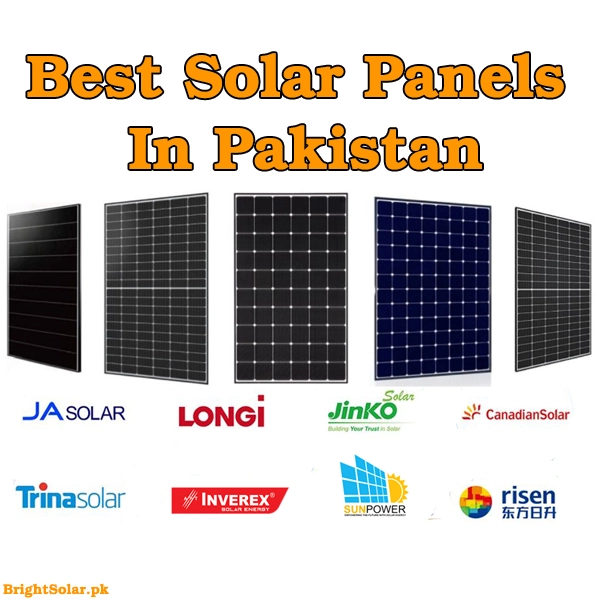
Several manufacturers active in Pakistan currently offer TOPCon, N-Type, or HJT ranges. Here’s what each is generally known for — explore each brand’s page for full specifications:
LONGi
Known for Hi-MO and HPBC series panels with strong reliability for residential rooftops.
Jinko Solar
Tiger Neo TOPCon line, widely used for its consistent output and good long-term yield.
Trina Solar
Vertex series, favoured for high-wattage modules in commercial-scale installations.
Canadian Solar
HiHero and HJT-based options aimed at customers prioritising maximum efficiency.
JA Solar
DeepBlue N-Type series, offering reliable output with efficient cell design.
Why Pakistan’s Climate Changes the Efficiency Equation
Panel datasheet efficiency is measured under lab conditions at 25°C. Pakistan’s summer roof temperatures regularly exceed that by 30–40°C, which reduces real-world output — this is called the temperature coefficient effect. Panels with a lower temperature coefficient (commonly HJT and premium N-Type modules) hold their output better through peak summer heat.
Dust and soiling are the other major factor. Airborne dust across Punjab and Sindh can meaningfully cut output between cleanings, so panel surface coating and a realistic cleaning schedule matter as much as the efficiency rating on paper.
How to Choose the Right Panel for Your Property
Match the technology to the constraint that matters most for your situation:
- Limited roof space: prioritise higher-efficiency panels (TOPCon or HJT) to maximise output per square foot.
- Very hot rooftop exposure: look at temperature coefficient, not just headline efficiency.
- Large, open roof or ground mount: standard high-wattage panels may be more practical than premium efficiency panels.
- Net-metered systems: higher yield per panel can help you reach export thresholds with fewer modules — see our net metering guide.
For sizing your full system correctly before comparing panels, our load calculation guide is a useful starting point.
Maintaining Panel Efficiency Over Time
All panels lose a small amount of output every year — this is normal degradation, typically covered by a manufacturer performance warranty. You can protect real-world efficiency by keeping panels clean of dust, ensuring correct tilt and orientation (generally south-facing across most of Pakistan), and avoiding partial shading from nearby structures, which can disproportionately reduce output on non-bifacial systems.
Explore Related Topics
Frequently Asked Questions
Which solar panel is most efficient in 2025?
HJT (heterojunction) and premium N-Type/back-contact panels currently offer the highest commercially available efficiency, generally in the 23–26% range, followed closely by TOPCon panels in the 21–23% range.
Does higher efficiency mean lower electricity bills?
Higher efficiency means more electricity generated from the same roof area, which can improve savings — but actual bill reduction also depends on system size, sunlight hours, shading, and your household’s consumption pattern.
Do efficient panels perform better in Pakistan’s summer heat?
Yes, generally. Panels with a lower temperature coefficient — commonly HJT and higher-grade N-Type modules — retain more of their rated output as rooftop temperatures rise during peak summer months.
Is a higher-wattage panel automatically more efficient?
No. Wattage depends on both efficiency and physical panel size. A larger panel can produce higher wattage without necessarily having a higher efficiency percentage — always compare the efficiency rating separately from the wattage figure.
How much do solar panels degrade over time?
Most modern panels are designed to retain the large majority of their original output after 25 years, with a small, gradual decline each year that is typically outlined in the manufacturer’s performance warranty.
How do I get guidance on which panel suits my roof?
You can reach the Pakistan Solar Traders team directly on WhatsApp or by phone for guidance based on your roof size, orientation, and electricity usage.
Need help choosing a panel for your property?
Talk to our team about efficiency, sizing, and technology — no pressure, just guidance.